Flexible Lighting by the Kitchen Sink – How to Make It Work

Flexible Lighting by the Kitchen Sink – How to Make It Work
The kitchen sink is one of the busiest spots in any home. It’s where you rinse vegetables, wash dishes, and prep ingredients. Yet, it’s also one of the most overlooked areas when it comes to lighting. Good, flexible lighting by the sink not only makes everyday tasks easier but also enhances the overall atmosphere of your kitchen. Here’s how to make it both functional and inviting.
Why Flexible Lighting Matters
Lighting by the sink should adapt to different situations. When you’re scrubbing pots or chopping produce, you need bright, focused task lighting. But when the kitchen becomes a social space—say, during a quiet evening or a dinner party—you’ll want softer, warmer light that sets a relaxed mood.
Flexibility means being able to adjust both brightness and direction. That way, you can create the right light for cooking, cleaning, or simply enjoying a calm moment.
Choosing the Right Light Source
Start by selecting the right type of bulb. LED lighting is the go-to choice for most American homes today because it’s energy-efficient, long-lasting, and available in a wide range of color temperatures.
- Cool white light (4000–5000 Kelvin) provides crisp, bright illumination that’s perfect for detailed work.
- Warm white light (2700–3000 Kelvin) creates a cozy, welcoming glow ideal for evenings.
- Dimmable LEDs let you switch between task and ambient lighting with ease.
Look for bulbs with a high color rendering index (CRI 90 or above) so that food and surfaces appear natural and true to color.
Placement: Avoid Shadows and Glare
One of the biggest challenges with sink lighting is avoiding shadows. If the light comes from behind you, your body can block the light and cast shadows over the sink. To prevent this, position the light in front of you—either under the cabinets or in the ceiling just ahead of the sink.
- Under-cabinet lighting is ideal because it shines directly onto the countertop and sink without glare.
- Recessed ceiling lights can provide even illumination, but make sure they’re angled to light the area in front of the sink.
- Adjustable fixtures with pivoting heads allow you to direct light exactly where you need it.
A good trick is to test the placement with a temporary lamp before installing permanent fixtures. That way, you can see how the light behaves in real use.
Blending Function and Style
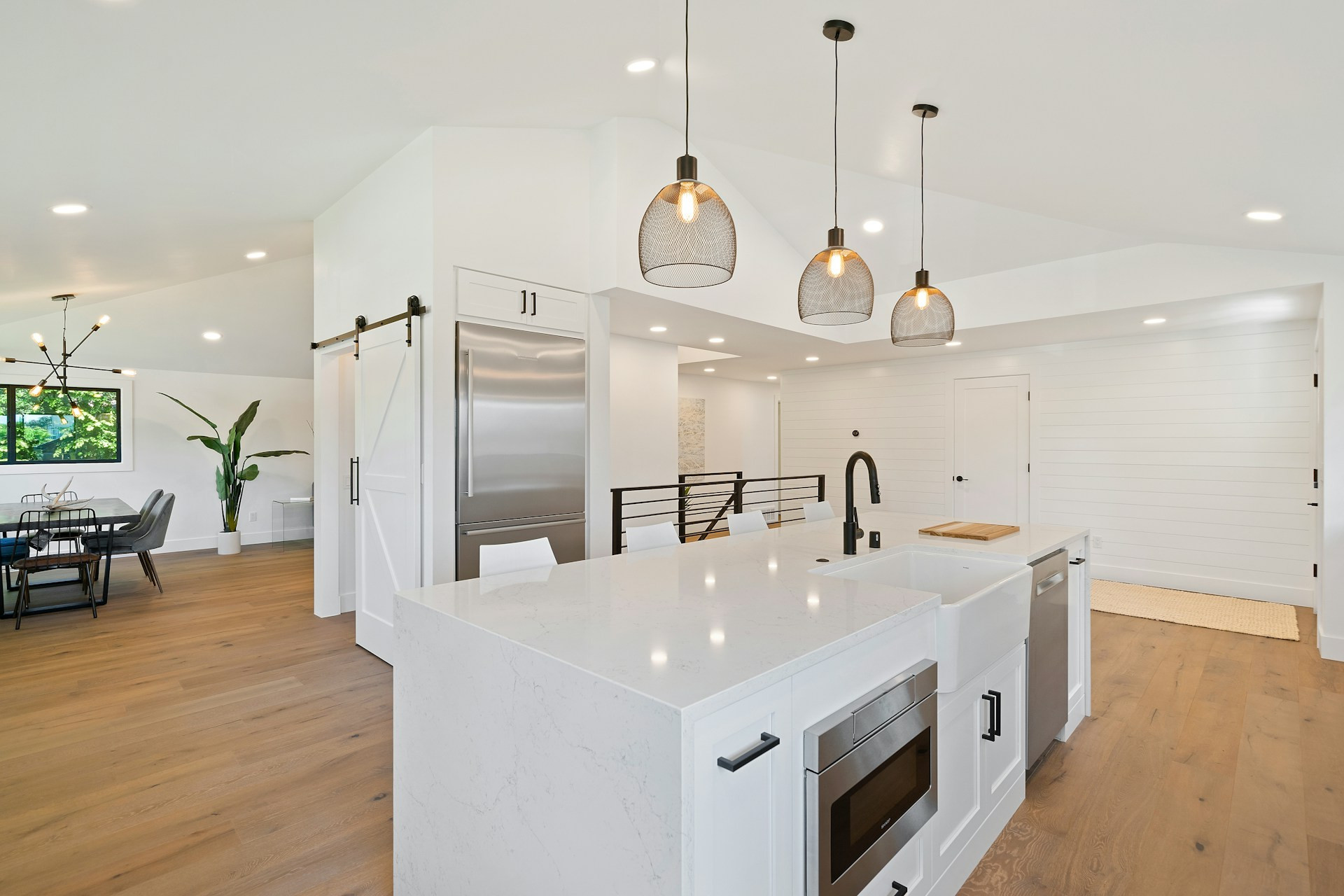
Lighting by the sink should be practical, but it can also be a design feature. In modern kitchens, fixtures are part of the décor. You can choose from sleek LED strips, minimalist spotlights, or decorative pendants—whatever fits your kitchen’s style.
If you have an open-concept kitchen, coordinate the sink lighting with the rest of the room’s fixtures. Matching finishes or shapes helps create a cohesive look and smooth transition between work and living areas.
Smart Controls and Technology
Today’s lighting technology makes flexibility easier than ever. Smart controls, wireless dimmers, and motion sensors can all enhance convenience and comfort.
- Dimmers let you fine-tune brightness for any activity.
- Smart home systems (like Alexa, Google Home, or Apple HomeKit) can store presets for “Cooking,” “Cleaning,” or “Evening Relaxation.”
- Motion sensors can automatically turn on the light when you approach the sink—handy when your hands are wet or full.
These features not only make your lighting more adaptable but also add a touch of modern comfort to your daily routine.
Think About the Whole Kitchen
While the sink is a focal point, it’s important to see lighting as part of the kitchen’s overall plan. A well-lit kitchen combines three layers: general lighting, task lighting, and ambient lighting. When these layers work together, the space feels balanced and inviting.
By planning your lighting as a whole, you’ll avoid dark corners and create a more harmonious look—even when only part of the lighting is on.
Make It Personal
Finally, flexible lighting is about personal preference. Some people love bright, cool light for a clean, modern feel, while others prefer warm, dimmed tones for a cozy atmosphere. Experiment with different settings until you find what suits your lifestyle best.
A well-lit kitchen isn’t just about function—it’s about how the space feels. When the lighting by your sink works just right, the entire kitchen becomes more comfortable, efficient, and full of life.